

What is the best lure for pike?
The best lure for pike isn't a single, fixed lure that always works. Pike respond to visibility, movement, size, water color, depth, and how active the fish are at that moment. Therefore, you choose your lure based on the conditions at the water. Shads are often a strong choice because they can realistically imitate a baitfish and can be fished in various ways.
If you're targeting pike, you want a lure that stands out without becoming unnatural. In clear water, a natural color often works well, while in murky water or low light, you'd choose a more striking color. The fishing method also makes a difference: casting along reed beds and drop-offs sometimes requires a different approach than slow trolling from a boat.
Brief Summary
The best lure for pike depends on water color, light, depth, and fish activity. Shads, plugs, spinnerbaits, and jerkbaits are widely used, but shads are versatile because they can effectively imitate a real baitfish. In clear water, opt for natural colors; in murky water, choose for extra visibility; and in changing conditions, go for reflection or contrast. Sinking lures help fish different water layers, both casting and trolling from a boat.
What is the best lure for pike?
The best lure for pike is a lure that suits the location where you're fishing. In a clear ditch with many plants, you wouldn't fish the same way as in a deep lake with wind, current, and varying light. Pike often hunt from cover. Think of reeds, aquatic plants, bridges, drop-offs, jetties, and obstacles where baitfish pass by.
Therefore, good pike lures revolve around three things: they must be visible, move naturally, and suit the water layer you're fishing in. A shad can solve many of these challenges. You can retrieve it slowly, let it sink to deeper water, or guide it just along edges and obstacles.
Other types of lures also have their place. Spinnerbaits create a lot of vibration and are useful near plants or obstacles. Jerkbaits work well if you want to fish actively with short twitches. Plugs can be strong when pike are hunting at specific depths. Nevertheless, a good shad for pike is a reliable base for many anglers, precisely because it offers so many possibilities.
What type of lure do you use for pike?
For pike, shads, plugs, jerkbaits, spinnerbaits, and spoons are mainly used. Each type of lure has its own moment. A plug often runs at a fixed depth and is pleasant when you want to quickly search a water layer. A spinnerbait stands out with vibration and flashes. A jerkbait requires a bit more technique but can work well with active pike.
A shad is interesting because you have a lot of control yourself. You determine how deep you fish, how fast you retrieve, and how much action you give it. A 16 cm shad is a good size for targeted pike fishing: large enough to stand out as a serious prey, but still easy to fish in ditches, canals, lakes, and rivers.
Pay attention not only to size but also to weight. Heavier lures cast further and sink faster but also require appropriate equipment. A sinking shad weighing 47 grams, like the River Crew Predatorshad, is therefore best used with a rod that can handle this casting weight well.

Why does a shad work well for pike?
A shad works well for pike because it can imitate a wounded or fleeing baitfish. Pike often hunt fish that are slightly off: a fish that swims slower, darts away briefly, or moves visibly through the water column. The tail action of a shad plays nicely into this.
When fishing for pike with a shad, control is important. If you retrieve too fast, your shad might move unnaturally. If you retrieve too slowly, you might miss the trigger that pike need to strike. The art often lies in retrieving slowly, occasionally accelerating, and giving your shad enough time to move properly.
A sinking lure also helps you fish different water layers. You can let the shad sink for a moment after the cast and then retrieve it in a controlled manner. This way, you don't just fish just below the surface, but also along drop-offs, deeper edges, and just above weed beds.
What color lure do you choose for pike?
You primarily choose the color of your lure based on visibility. In clear water, pike see more details. Then natural colors often work well, as they resemble real baitfish. In murky water, pike have less visibility, and your lure can stand out more.
Light also plays a role. On sunny days, silver or a subtle shimmer can stand out beautifully. In cloudy weather, dusk, or colored water, a bright color can make all the difference. There is no color that always works, but you can start smart.
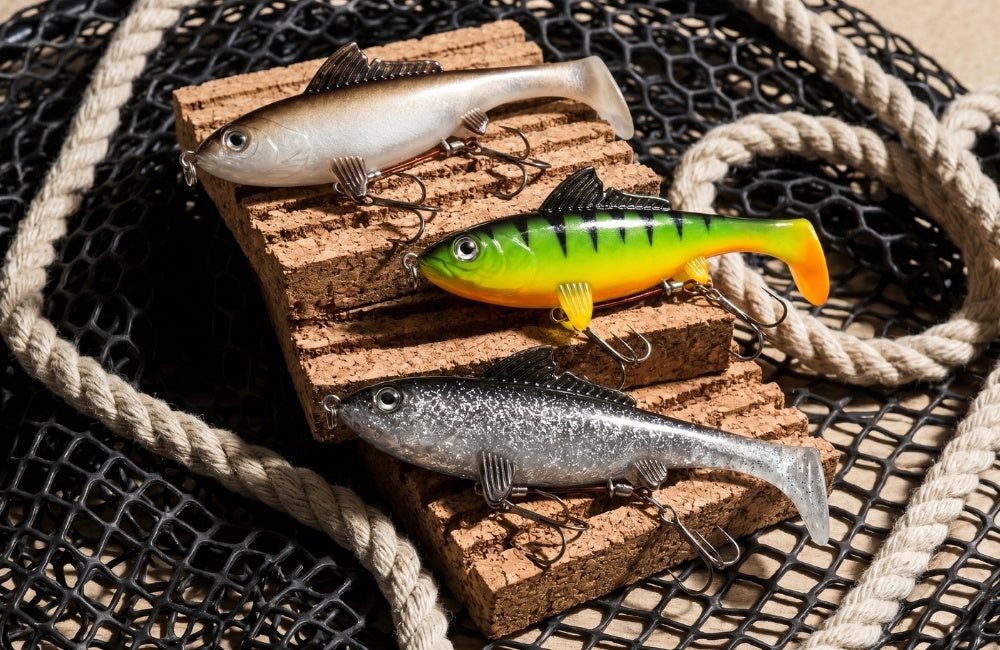
River Predator for clear water
The River Predator has a natural brown-mother-of-pearl coloring and is designed for targeted pike fishing. Due to its natural appearance, this shad is particularly interesting in clear water, where pike can examine your lure well.
With a length of 16 cm, a weight of 47 grams, and a sinking design, the River Predator is widely applicable. You can cast it along reed edges, drop-offs, and bridges, but also use it for trolling from a boat. The specially designed fins ensure a natural left-right movement, while the soft tail provides lively action.
Silver Hunter for reflection and baitfish imitation
The Silver Hunter features a silver-black color scheme with subtle glitter. This shad imitates a natural baitfish and creates slight reflections underwater. This can work well when there is some light on the water or when pike are hunting silver-colored prey fish.
The Silver Hunter is also 16 cm long, weighs 47 grams, and is sinking. It is suitable for both casting and trolling from a boat. Besides pike, zander, large perch, and asp are also regularly caught as bycatch.
Tiger Strike for murky water and low light
The Tiger Strike is the most striking color of the three. The green-yellow-orange color scheme with black stripes stands out extra well underwater. This makes this shad suitable for situations where visibility is important, such as murky water, dark days, or moments with low light.
Like the other Predatorshads, the Tiger Strike is 16 cm long, weighs 47 grams, and is sinking. The shad is designed for pike and can be fished both casting and trolling. Zander and large perch can also be caught as bycatch.
Comparison: River Predator, Silver Hunter, and Tiger Strike
| Shad | Color | Best conditions | Target fish | Bycatch | Suitable for |
|---|---|---|---|---|---|
| River Predator | Brown / mother-of-pearl | Clear water and natural presentation | Pike | Zander and large perch | Anglers who want to use natural lures |
| Silver Hunter | Silver / black with glitter | Light reflection, baitfish imitation, and changing conditions | Pike | Zander, large perch, and asp | Anglers looking for a subtle, striking baitfish color |
| Tiger Strike | Green / yellow / orange with black stripes | Murky water, low light, and extra visibility | Pike | Zander and large perch | Anglers who want their lure to stand out clearly |
Pike Lure Tips
A good pike angler not only looks at the lure but especially at the situation. Water color, wind, light, temperature, and location often determine more than the color that happens to be at the top of your tackle box. Start with a logical choice and then dare to switch.
- Vary your retrieve speed: retrieve slowly and occasionally add a short acceleration.
- Fish multiple water layers: start shallow and then let your shad sink deeper.
- Adjust your color for visibility: natural in clear water, striking in murky water.
- Fish slower and more controlled in colder water.
- Check your lure after strikes for tears, bent hooks, or debris on the tail.
- Choose a lure that suits the water: shallow ditches require something different than deep lakes.
Many pike will follow first before striking. Therefore, a short acceleration or slight change of direction can help. Don't let your shad do the same thing all the time. Small differences in retrieve speed can often convince a hesitant pike to strike.
Casting or Trolling with Lures?
Casting with lures is ideal when you want to actively search for spots. You cast along reeds, bridges, jetties, drop-offs, and plant edges. Let your shad sink for a moment, retrieve slowly, and maintain contact with your lure. This way, you can specifically search for pike that are positioned near obstacles or transitions.
Trolling from a boat works differently. You let the lure run behind the boat and cover larger stretches of water. This can be useful in lakes, canals, and rivers where pike are scattered. The three River Crew Predatorshads are, according to the product information, suitable for both casting and trolling from a boat.
When trolling, it's important that your lure swims well at the speed you're going. When casting, you have more control over pauses, accelerations, and depth. Both methods can work well, as long as you adapt your lure to the location and conditions.
Using Sinking Lures for Pike
Sinking lures give you more freedom in depth. After casting, you can count how long your shad sinks and then start retrieving. This way, you develop a feel for the water layer you're fishing in.
In shallow water, you need to start retrieving faster or hold your rod tip higher. In deeper water, you can let the shad sink longer and retrieve more slowly. This makes sinking lures useful when you don't know exactly where the pike are.
Common mistakes when choosing pike lures
A common mistake is always using the same color. Sometimes your favorite color works great, but on another day the water is murkier, the light is different, or the fish are feeding at a different depth. Then you need to dare to switch.
A second mistake is retrieving too fast. Pike can strike hard, but that doesn't mean your lure always needs to move quickly. Especially in colder water or with passive fish, a slower retrieve can be better.
Also, too much attention is often paid to color and too little to action. A good color helps, but a shad that moves naturally, sinks well, and retrieves steadily is at least as important. Therefore, always check how your lure runs next to the bank.
Finally, many anglers only fish one water layer. They cast, retrieve, and repeat at the same depth. However, pike can lie just above the bottom, suspend in mid-water, or stand shallow among plants. By varying depth, you'll find where the fish are active more quickly.
Conclusion: what is the best lure for pike?
The best lure for pike depends on where and when you fish. In clear water, a natural color is often logical. With varying light conditions or baitfish on the surface, silver with subtle reflections can be a good fit. In murky water or low light, you should opt for a striking lure that is more visible.
Shads are a strong choice because you can fish them calmly, controlled, and at different depths. The River Crew Predatorshads are designed for targeted pike fishing and are available in three distinct color choices: natural, reflective, and striking. If you want to see more options, visit the River Crew lure collection.
FAQ about the best lure for pike
What is the best lure for pike?
The best lure for pike is a lure that matches the conditions. Shads, plugs, spinnerbaits, and jerkbaits can all work. A shad is often a good base because you can fish it at different depths and speeds.
What color lure works well for pike?
In clear water, you usually choose natural colors. In murky water or low light, striking lures often work better. Silver and subtle glitters can be good when you want to imitate baitfish and use light reflection.
Is a shad suitable for pike?
Yes, a shad is very suitable for pike. A shad can realistically imitate a baitfish and is good for use along reeds, drop-offs, bridges, plant edges, and in open water.
Can you catch zander or perch with the same lure?
Yes, you can. The River Crew Predatorshads are designed for pike, but according to the product information, zander and large perch are regularly caught as bycatch. With the Silver Hunter, asp can also be caught as bycatch.
Is a sinking lure useful for pike?
Yes, a sinking lure is useful because you can fish different water layers. You can let your shad sink to the desired depth and then retrieve it slowly or with short accelerations.


