

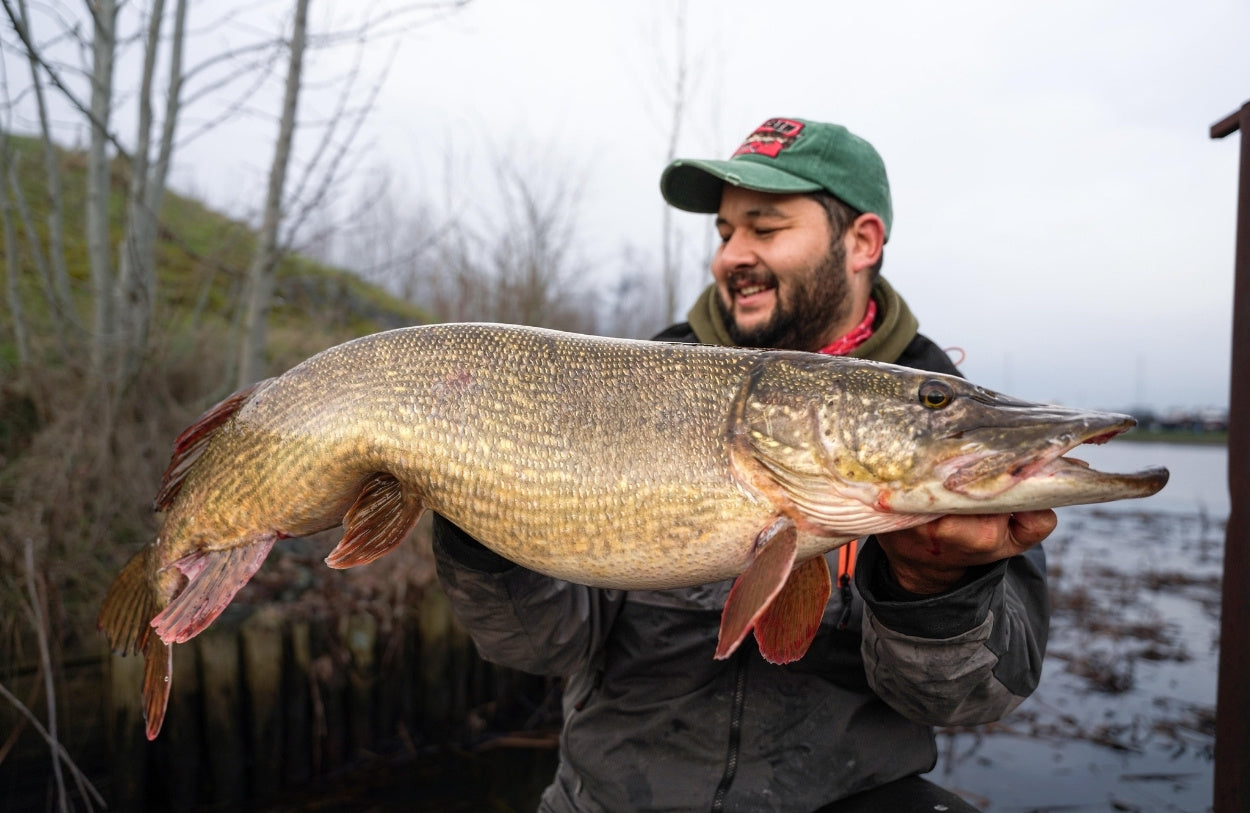
In the first few weeks after the end of the closed season for pike, you often find pike surprisingly close to the spawning grounds: shallow bays, reed beds, ditch mouths, and sheltered areas with old plant material. Not because they are still "spawning", but because they have been there and can recover there. After that, they gradually move to the first depth transitions and the edges of new plant growth, where prey fish pass by.
When is the closed season for pike in the Netherlands?
The legal closed season for pike in the Netherlands runs from March 1st to the last Saturday of May.
In 2026, this last Saturday falls on May 30, 2026. From Sunday, May 31, 2026, the predator fishing season in most inland waters will be "open" again.
Please note: on some large waters (such as IJsselmeer/Markermeer), different conditions may apply, often continuing until June 30. Therefore, always check the conditions for your water via VISplanner or your water list.
Why are pike often in shallow water after the closed season?
Pike are one of the first predators to think about reproduction. As soon as the water starts to warm up, they move towards shallow areas with plant debris and cover.
Many sources state that pike prefer to spawn in shallow water near aquatic plants, and that spawning (depending on weather and water temperature) can begin around February/March.
After that period, they don't immediately "leave". Large pike need time to recover. As a result, the area around the spawning ground is often still interesting for a while: it is warmer there, new life starts there first, and prey fish quickly appear.
Where are pike located after the closed season?
In the weeks immediately following the end of the pike closed season, you can roughly expect them in three places:
-
Edges around the spawning zones
Think of the transition from very shallow to slightly deeper: the edge of reeds, a narrow slope, the outer edge of a plant bed. In many waters, pike still linger close to these areas. -
Sheltered areas with current breaks or cover
On rivers and canals, these are sheltered areas behind groynes, corners out of the main current, inlets, and harbour mouths. Pike like places where they don't have to swim much but still see prey passing by. -
The first "new" plant growth
As soon as aquatic plants reappear (and the water becomes clearer), pike often move to the edges of that growth. Prey fish come there to feed and shelter – and pike are right behind them.
What are the best locations to fish for pike immediately after the closed season?
The best spots depend on the type of water, but these are places that consistently deliver every year:
In polder waters and ditches: wide reed beds, culverts and ditch mouths, dead-end sections where the water warms up slightly faster, and transitions from mud to harder ground (e.g., stone revetments). In these types of waters, "shallow" is often the main zone in spring.
In lakes and ponds: sheltered bays, calm areas behind islands, and the outer edges of lily pads or young plant fields. A frequently recurring tip: start shallow near spawning grounds and only then work deeper towards drop-offs.
In rivers and large canals: sheltered areas behind groynes, inlets, and harbour mouths. Pike like to "hang out" where they can conserve energy, especially if they still need to regain strength.

Approach in the first few weeks after the closed season for pike
Keep it calm and controlled. Pike can be eager, but are often picky: one day they'll hit a aggressively fished plug, the next day they want something that stays in view longer. Vary your depth, especially: start shallow, fish the edges, and only then tackle the first depth transition.
A common mistake is to immediately start fishing deep "because the season is open." Especially during this period, pike are often not yet in their summer spots. The opposite can also happen: staying too long only in the very shallow areas, while the fish have already moved to the outer edge. The key is to adapt: start shallow, work the edges, and go a step deeper each time.
What are the rules during the closed season for pike?
The closed season for pike is a closed season for the fish species. This means: if you catch a pike during this period, you must immediately release it.
In March, you are still allowed to fish with artificial lures in many inland waters, but all pike must be released.
From April 1st up to and including the last Saturday of May, the closed season for bait types also applies: fishing with (almost all) artificial lures and dead bait is prohibited in many inland waters.
Therefore, you cannot "cleverly" specifically target pike with artificial lures in April and May. The idea is precisely to create peace around the spawning period.
Frequently asked questions about where pike are found after the closed season.
When does the closed season for pike end in 2026?
In most inland waters, the closed season for pike ends on Saturday, May 30, 2026.
Where should I start on the first day after the closed season?
Start in or near the shallow spawning grounds: reeds, plant debris, sheltered corners. Then work the outer edge and the first drop-off.
Do pike go deep immediately after the closed season?
Usually not. Many pike first stay near shallow areas and later move to edges and depth transitions.
Are there exceptions per body of water?
Yes. Some waters (such as large bodies of water) may have different periods/conditions. Always check your water list or VISplanner.


