

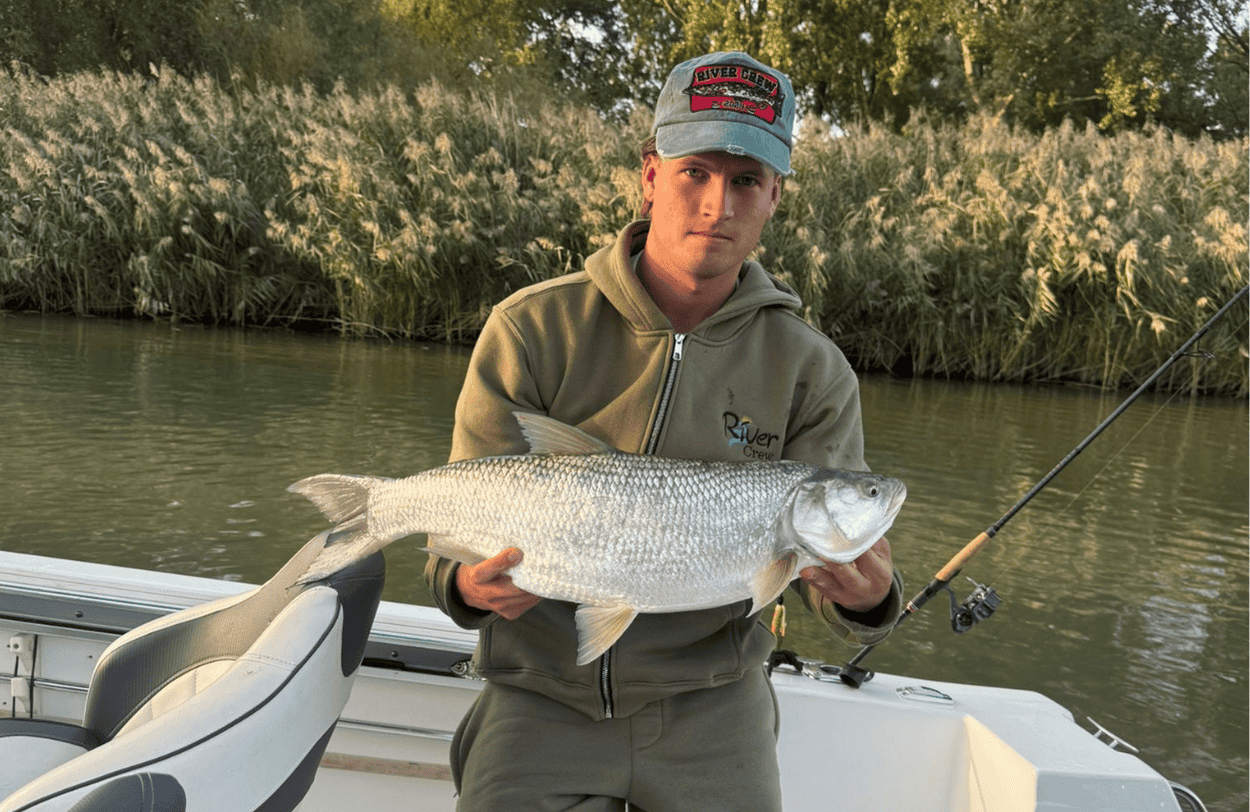
Fishing for asp is all about pace and timing. If you see a current seam or groyne, cast net over it and reel in tight immediately. This guide will tell you where to stand, when to go and how to get around. chooses bait presentation so that the next tap will stick.
What is an asp?
Asp is a fast, silver-colored predator from the carp family. It has an elongated body and an upward-facing mouth, made to hunt small fish at or just below the surface. In the Netherlands you mainly encounter asp on the large rivers and waters that are associated with it connected, such as canals and river ponds. ( RAVON)
What makes asp different?
Asp hunts by eye and uses currents. It often claps in short bursts on schools of baitfish at the surface. Where pike or zander sometimes accepts a break, asp mainly hooks on speed. This requires when fishing for asp tight control, long casts and lures that keep moving straight as you change pace makes. Cuttings with pressurized water; groynes, outflows, bridge piers, are his playing field.

Best times and conditions for fishing for asp
Most bites occur around sunrise and in the dusk. Summer and early fall are the best seasons, although a stable autumn week just as well. Wind on the shore helps: it breaks the light, pushes baitfish towards the bank and gives your lure that little bit of extra life. If you see a pin bait on the surface, don't hesitate; cast immediately. That moment is often decisive for effective asp fishing.
Cuttings that yield
Groynes provide structure and flow. Start at the head, cast diagonally across the current seam and fish the trail back towards the eddy. Make a few well-aimed casts at each corner and continue on; asp rewards making meters. Outflows from pumping stations or locks are also strong: oxygen, currents, and concentrated baitfish. In connected lakes and harbors is it worth fishing on windy mornings along the outer edges where the current pulls the water in or out.
The best technique
Fish fast and tight. A constant, higher retrieve speed with An occasional short burst of acceleration works better than big bursts and long pauses. As soon as your lure hits the water, start reeling it in immediately; asp often takes hold in the first meters. Keep your line under tension, change direction and Adjust the pace subtly and keep casting when you see eddies or hunting fish. Test at home or your bait continues to run straight when you turn. Does it pull crooked or If it breaks out, choose a slimmer model or a different spoon.
Material that fits
Choose a spinning rod of about 2.40 to 2.70 meters with a Casting weight around 10–30 grams. This length gives you casting distance and hold in the current. A 2500 or 3000 reel with thin braided line (about 0.10–0.12 mm) provides direct contact. At the front, place a piece of fluorocarbon 0.25–0.30 mm to absorb abrasion against rocks and shells. Where possible, fish you use single hooks: this makes unhooking faster and is friendlier to the fish.
Lures that make the difference
Asp likes slim and fast. Casting spoons and spinners far, keep line in flow and run straight when you pick up speed. Slim, Shallow running plugs of seven to ten centimeters are ideal when fish hunts on the surface or just below it. Is the water flat and can you see clear activity, then a surface plug can be decisive. Which color? Start with natural (silver, bass, smelt) and keep one striking color Have some color on hand for cloudy water or twilight.
Tips and common mistakes when fishing for asp
Keep walking. Complete a crib section in a few minutes and go continue if nothing happens. In the spring, connect to pin bait with smaller baits; later in the season, you can easily go a size larger. Watch for signs: Splashes, swirls, hunting seagulls. The most common mistake is getting in too slowly. fishing. A second is to use lures that are too clumsy and break out of the track as soon as you turns around. A third is starting without control: test your bait beforehand in the current or along the edge, then you know what it does when you accelerate.
Rules and fish welfare
Please note the closed season for artificial bait: from April 1st to on the last Saturday of May you are not allowed to use the inland waters with most Do not fish with artificial bait or with dead baitfish or parts thereof. Check Check the current regulations and your fishing permit information every year. Treat the fish properly: use a wet landing net, hold the fish low above the water and quickly dislodge it. A A short recovery pause in the water before letting go helps.
Clothing for the waterfront
Layers always work. Start with a River Crew T-shirt and then add a warm hoodie for the early and late hours. On sunny or windy days you wear a cap ; in the colder months a Beanie keeps your head warm. This base layer allows you to keep moving comfortably and stay sharp longer.
Frequently asked questions about fishing for asp
Do you only catch asp in current?
No. Current is often better, but it can also occur on connected lakes and harbors. Pay extra attention to wind on the shore and activity on the surface.
What is the best lure for fishing for asp?
Slim spoons and spinners for distance and line holding, and shallow running slim Plugs for sight hunting. In flat water and hunting fish, a surface plug can be used be surprisingly good.
How quickly should you reel in an asp?
Faster than you're used to with many other rovers. Maintain a constant, smooth speed up and add a short burst of acceleration every now and then. Choose lures that while continuing to run stably.
When is the best time to fish for asp?
Early morning and dusk usually yield the most. Summer and early Autumn is great, but a quiet autumn week with stable weather can be just as good.


