

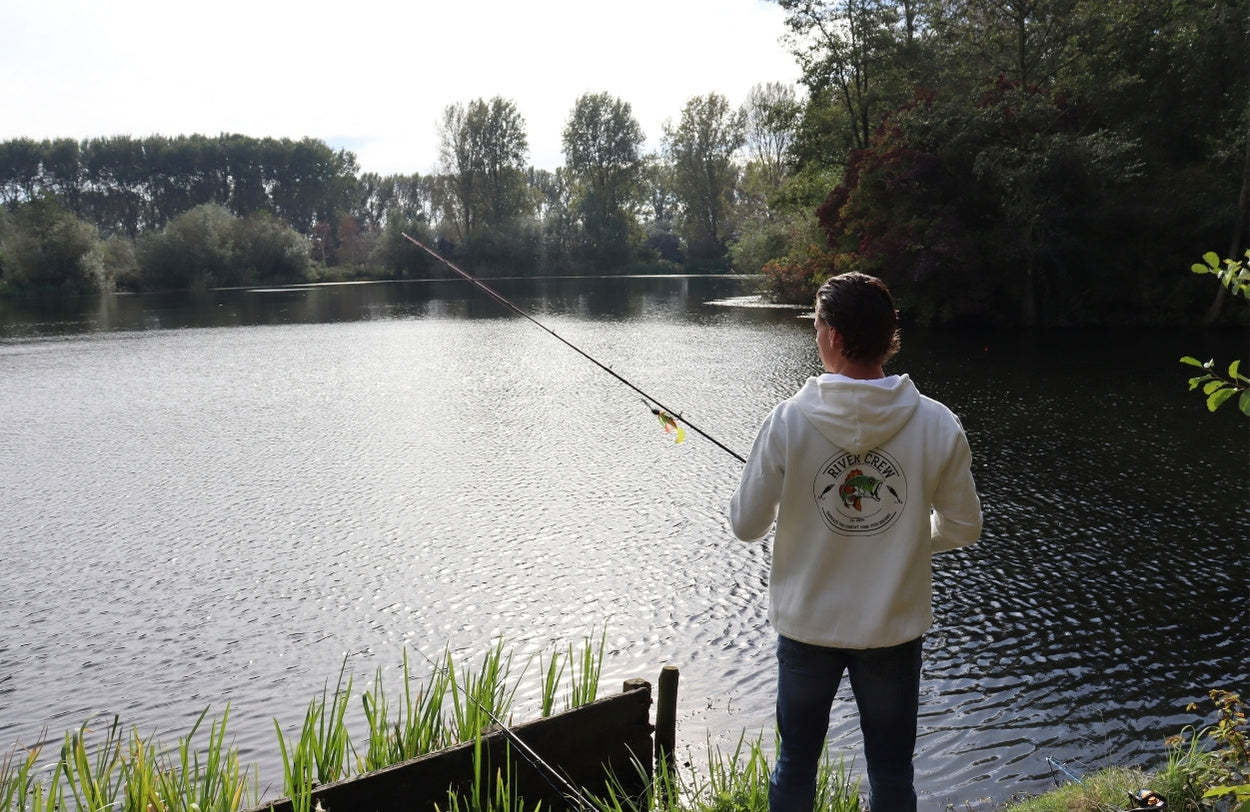
Dropshot fishing is a predatory fishing technique where you attach a lead weight to the bottom of your leader and above that, at a fixed distance, you hook with artificial bait or a worm. The lead rests or slides over the bottom; the bait "hangs" just above it and moves with small taps of your rod tip. This way you present it exactly in the zone where Perch and pike-perch like to feed, even on days when they are passive. The big advantage: you maintain constant contact with the ground, you can easily control the depth with the distance between hook and lead, and you lose less material because you are just above fishing for obstacles.
Dropshot fishing for beginners
Start simple. Choose a light rod with a sensitive top and enough backbone, around 2.10–2.40 meters. Below that a small reel with a thin braided main line for good contact, with a Fluorocarbon leader that is less noticeable underwater. Don't use too heavy Lead: in still water 5–7 grams is often sufficient; in deeper or flowing water go you a bit up. Shads of 6–10 centimeters almost always work as bait. A slim V-tail for subtle, or a shad with a paddle tail if you want something more vibrations. Keep it simple: rely on one or two models and switch only if the bites don't come.
What many beginners do wrong is fishing tight all the time. occasionally consciously fall a little slack in line. Just at the moment when you When the bait hangs still for a moment or slowly drifts down, the bite often comes. a mistake: every tap with the rod immediately drags the lead along. Better is small taps from the wrist, and then only turn half a meter inwards to take the lead Moving. This way you can fish a spot calmly and accurately.
How do you make and fish a drop shot?
The installation is simple. Tie your hook perpendicular to the bottom line, with the point pointing upwards. Leave twenty to one hundred centimeter line free and clamp the drop shot lead at the end. The larger the distance, the higher and more "floating" your bait will be. Place your shad on the hook so that the hook point remains free; then you crochet better.
Casting fishing works as follows: Cast over the spot, let it Drop straight down to the bottom and keep light tension so you can feel when the bottom contact is there. Give a series of small taps with the tip, let a short pause with a little slack line, and then reel in a little bit. Repeat this rhythm. Vary the length of the pauses and the intensity of your taps. On tough days longer silences are strong; if the fish is active, it's a bit spicier.
If you are sailing with a boat or belly boat, you can use a second fishing rod drag a drop shot rig a few meters behind you. This is how you present continuously close to the bottom without having to look at it much. a clear click or bent top is simply striking.

Dropshot fishing with worms
Dropshot fishing with worms is a great alternative, especially on clear water or waters where fishing is frequent. Prick the worm so that it can move freely can move; one time through the head or middle is enough. Fish more calmly than with a shad, with longer lulls. Worms work well on perch, especially when shads failing. Artificial worms are useful because they stay firmly in place and Maintain a consistent shape. Feel free to alternate between shad and worm on the same spot; a different shape or profile can just make the difference.
Dropshot fishing from the shore
From the shore you can fish very precisely with dropshot Work. Always start at your feet; there are more fish swimming against the shore than you think. Then work your way around the cutting in a fanning pattern. Good spots include quays, bridges, and dolphins. mooring places, under boats, edges of embankments and transitions from soft to hard bottom. You can automatically feel with the lead when you are over a rock, mussel bank or clay goes. Note where you feel hard knocks and where you catch; those are cuttings to remember.
Also adjust your bait height per location. You can also use it to protect against rockfall. you fish short (twenty to thirty centimeters) for control and less stuck. On flat bottoms or when the fish hunts a little higher, forty works up to sixty centimeters is often better. In deeper or murky water you can adjust the distance enlarge even further, to around a meter, so that the bait remains in view for longer stays.
Lures, colours and smart tips
You don't have to worry about color. Take a natural tint (bass, smelt, motor oil) and a striking colour (chartreuse or pink) for cloudy or dark water. More important than color is variation in form and presentation. If it remains quiet, change V-tail to paddle tail or from shad to worm. Also change the rhythm: a unexpected change of direction or a prolonged pause often triggers a bite.
Pay attention to your lead shape. A lead rod slides easily through rocks; Pear or egg shape gives a more direct feel for the ground. Use the lightest lead possible, but heavy enough to keep feeling the bottom. Check your hooklink regularly checked for wear and tear, especially if pike are present.
In summary
When drop-shot fishing, the lead lies on the bottom and your bait hangs just above it, exactly where perch and zander hunt. This allows you to clearly sense what's happening underwater and quickly adjust the height of your bait. A sensitive rod, thin line, a piece of fluorocarbon, a light lead, and a shad or worm will go a long way. Start slowly close in and then work your way up. Consciously leave a little slack in the line occasionally and remember where you get taps and bites. This will build your confidence and help you catch more consistently.


